How Are Political Signs Made?
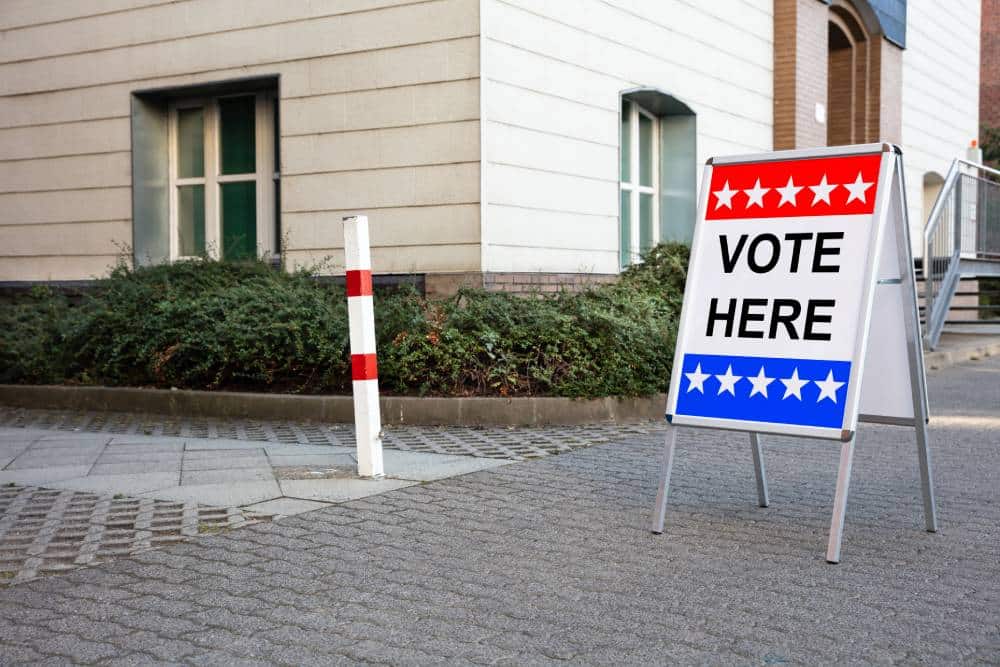
A well-placed political yard sign works around the clock, which reinforces a candidate’s name without asking anything in return. That constant presence explains why campaigns of all sizes continue to invest in signage year after year.
At first glance, a political sign seems simple. In reality, production involves a series of intentional decisions tied to psychology, timing, materials, and local regulations.
Campaign signage needs to communicate a message in seconds, survive outdoor conditions, comply with election laws, and remain affordable enough for wide distribution. Those requirements affect every stage of the manufacturing process, from the earliest design choices to the final placement in a front yard or along a busy roadway.
So, how are political signs made? Let’s look into why some signs last through an entire election cycle, and others fade, warp, or disappear long before voters reach the polls. This guide breaks down the process step by step using proven industry practices and real campaign needs.
Learn what goes into producing political signage that performs in the field rather than only looking good on a screen.
How Are Political Signs Made for Campaign Visibility?
Political signage exists to deliver instant recognition. Voters often encounter signs while driving, walking, or passing through familiar neighborhoods, which means messages must register almost immediately. This reality shapes the production process from the beginning.
Everything starts with intent. Campaigns define the purpose of the sign before a single design element takes shape. Some signs focus purely on name recognition, especially in local races where voters may recognize a name more easily than a platform. Others include office titles, incumbency details, or short slogans meant to reinforce credibility. These goals influence size, layout, color choices, and material selection long before printing begins.
Once objectives are clear, artwork moves into preparation. Designers adjust layouts to fit standardized sign dimensions, paying close attention to spacing, contrast, and legibility. Overly decorative fonts or crowded designs tend to fade in the distance, so practical political signage favors clean typography and bold color separation. Files also undergo technical checks to confirm resolution and color settings align with large-format printing requirements.
Only after these steps does production shift from concept to physical creation.
Material Choices That Define Performance
Material selection affects more than appearance. The substrate determines how long a sign remains upright, how it responds to weather exposure, and how efficiently a campaign can deploy signage across dozens or thousands of locations. Political signage typically relies on two proven materials because each performs reliably in different campaign settings.
- Corrugated Plastic for Outdoor Visibility
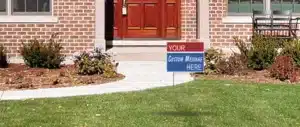
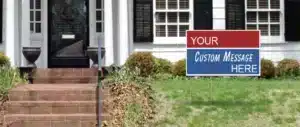
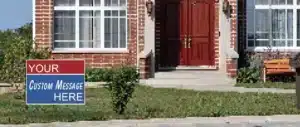
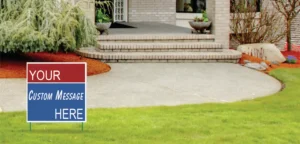
Corrugated plastic yard signs have become the standard for outdoor political signage because they can handle the demands of real-world placement. The fluted structure gives the sign internal strength. It helps the sign remain flat and legible after repeated exposure to sun, light rain, and temperature changes during an election cycle.
Campaigns favor this material for residential yards and roadside placement since corrugated plastic slides easily onto metal wire stakes. That compatibility accelerates installation during volunteer-led sign drops and simplifies repositioning if placement rules change. The material also retains printed colors well, helping campaign branding remain recognizable over weeks of exposure.
Another advantage lies in scalability. Corrugated plastic supports high-volume production without sacrificing consistency. This allows campaigns to deploy standard-sized yard signs across multiple neighborhoods and regions with a uniform look.
- Poly-Coated Cardboard for Standalone Displays
Poly-coated cardboard serves a different function within a campaign’s signage strategy. Rather than relying on stakes, fold-over construction allows these signs to stand independently. They are well-suited for entrances, sidewalks, polling locations, and indoor-adjacent spaces where stakes may not be permitted.
The poly coating adds a protective layer that helps the board resist light moisture and surface wear during short-term use. Added protection keeps messaging legible through multiple setups and takedowns. This is helpful for campaigns that host rallies, fundraisers, or volunteer events at rotating venues.
Larger fold-over yard signs offer more space for messaging when distance viewing matters less than presence. Campaigns often reserve these signs for controlled environments. Placement remains consistent, and visibility is driven by proximity rather than traffic speed.
- Material Thickness and Structural Integrity
Thickness plays a quiet but essential role in sign performance. Thicker corrugated plastic presents greater rigidity, helping signs stay upright in breezy conditions and maintain a clean appearance over time. That added stiffness works well in open areas where wind exposure remains unpredictable.
Thinner materials serve campaigns with short deployment windows or tightly managed budgets. These options still deliver visibility but prioritize cost efficiency for signs expected to remain in place for limited periods. The decision comes down to how long the sign needs to perform, not how it looks on day one.
Selecting thickness based on placement strategy allows campaigns to allocate resources more effectively. Heavier materials are reserved for high-exposure locations. Meanwhile, lighter options are well-suited for temporary or supplemental placements.
- Matching Materials to Campaign Strategy
Successful campaigns treat signage as a system rather than a single product. Corrugated plastic handles widespread outdoor visibility, poly-coated cardboard addresses controlled environments, and thickness choices align with duration and location. Matching materials to strategy reduces waste, improves consistency, and keeps signage working as intended through election day.
Material decisions made early in production ripple through printing, finishing, installation, and longevity. It explains why thoughtful selection remains a cornerstone of effective political signage.
Printing Techniques That Preserve Impact
Printing technology determines how effectively a design transfers from screen to sign. Political signage relies heavily on digital flatbed printing, a method well-suited for high-volume production with consistent color output.
Flatbed printing allows ink to cure directly on the surface, helping maintain sharp edges and vibrant colors. This approach handles both small and large runs efficiently and gives campaigns the flexibility to adjust quantities or update messaging without resetting equipment.
Ink selection influences longevity as well. UV-cured inks resist fading from sunlight and maintain contrast over time. Solid contrast between background and text improves readability from a distance, which matters far more than intricate design details. The printing stage prioritizes function over ornamentation because visibility determines success.
Precision Cutting and Finishing
After printing, signs move through finishing processes that define their final shape and usability. Precision cutting trims each sign to exact dimensions, allowing consistent sizing across large batches. Standard dimensions remain popular because they fit common stakes and comply with local placement guidelines.
Fold-over signs require scoring rather than simple cutting. Accurate scoring allows the material to bend cleanly and stand upright without collapsing. Even minor inaccuracies at this stage can affect stability, especially for signs placed on uneven ground.
Hole placement also requires attention for corrugated plastic signs. Flute direction affects how stakes slide through the material and how well the sign maintains its position. Additionally, proper alignment prevents sagging and rotation after installation, which keeps messaging visible and professional throughout deployment.
Quality Review Before Distribution
Quality checks remain key even when campaign timelines move quickly, since small inconsistencies can become noticeable once signs are installed across dozens of locations.
Visual inspections focus on color accuracy, print alignment, and overall structural uniformity to confirm that each batch reflects the intended design. Reviewing samples before full distribution helps identify variations early, which prevents issues from reaching the field at scale.
Packaging also influences how well signs perform upon arrival. Careful stacking reduces the risk of bending, and protective layers limit surface marks that could affect visibility. Domestic production enables faster revisions when adjustments are necessary. It lets campaigns respond without losing valuable time during election windows.
Timing and Campaign Planning
Political signage delivers the most value within a specific deployment window, where visibility builds recognition without overwhelming voters. Campaigns often plan installations four to eight weeks before election day. It’s a period that allows names to become familiar while keeping signs noticeable rather than ignored. Installing too early risks visual fatigue, while installing too late limits the number of impressions a sign can generate.
Production schedules need to align with this timing. Placing orders several weeks in advance allows time for artwork review, printing, finishing, and distribution. Last-minute orders leave little room for correction and depend heavily on everything going perfectly the first time.
Campaigns that plan to retain flexibility throughout the season. It becomes easier to reorder popular designs, replace damaged signs, or expand placement into new areas as momentum grows.
Design Principles That Drive Recognition
Political signage works best when it communicates immediately, without asking viewers to pause or interpret the message. Since many signs are seen only briefly, designs must register quickly and remain easy to recall. Candidate names take priority, with office titles added when they help establish relevance or credibility.
Color choices play a major role in recall. High-contrast combinations improve readability from a distance and hold visibility during early morning and evening hours when lighting conditions change. Fonts with clean letterforms perform better than decorative styles, especially when viewed from moving vehicles.
Restraint often leads to stronger results. Short slogans outperform dense messaging, and consistent branding across yard signs, event signage, and larger displays helps reinforce recognition as voters encounter the campaign in multiple settings.
Placement Awareness and Compliance
Placement rules differ by location, though standard guidelines appear across many regions. Signs are often restricted near polling locations, federal highways, public rights-of-way, and utility poles. These limitations affect where and how signage can appear throughout the campaign.
Disclaimer requirements also apply to many elections, requiring clear identification of the sign’s sponsor. Some areas regulate when signs may be installed, making timing as important as location.
Understanding these requirements protects campaigns from removals, penalties, and wasted inventory. Careful planning lets signage remain in place through election day, preventing premature removal and potential issues.
Bringing Campaign Messaging Into the Real World
Political signage turns campaign messaging into something tangible and visible within everyday environments. From the moment artwork enters production to the final placement on a lawn or along a roadway, each step influences how voters perceive the campaign.
Understanding the manufacturing process enables campaigns to make informed decisions aligned with placement strategy, budget, and timing. Well-produced signs continue working long after installation, reinforcing recognition and familiarity day after day.
Turning Campaign Ideas Into Printed Results
At PoliticalLawnSigns.com, we apply these production principles to help campaigns bring their ideas to life in the physical world with consistency and reliability. Our approach centers on practical execution, dependable materials, and coordination that respects the pace of election cycles.
Contact our team to discuss timelines, quantities, and signage options aligned with their overall strategy.