Corrugated vs. Poly-Coated Signs: Cost Breakdown For Campaigns
Quick Summary
Poly-coated signs cost less upfront and work well for short campaigns, events, and high-volume distribution runs. Corrugated plastic costs more per unit but lasts 2 to 3 years outdoors, making it the more economical choice across longer races or multiple election cycles. Order quantity, sign size, print method, and hardware all affect the final cost of either material. Campaigns that split their order between both materials tend to get the most coverage for their budget.
Campaign budgets rarely leave room for wasted spending. Every expense matters, and signage is often one of the larger investments during an election cycle.
At PoliticalLawnSigns.com, our campaigns at every level regularly ask about corrugated vs. poly-coated signs cost before finalizing an order. The price difference between these materials is important, but the lowest upfront price does not always create the best overall value.
Corrugated vs. Poly-Coated Signs Cost: What You Are Comparing
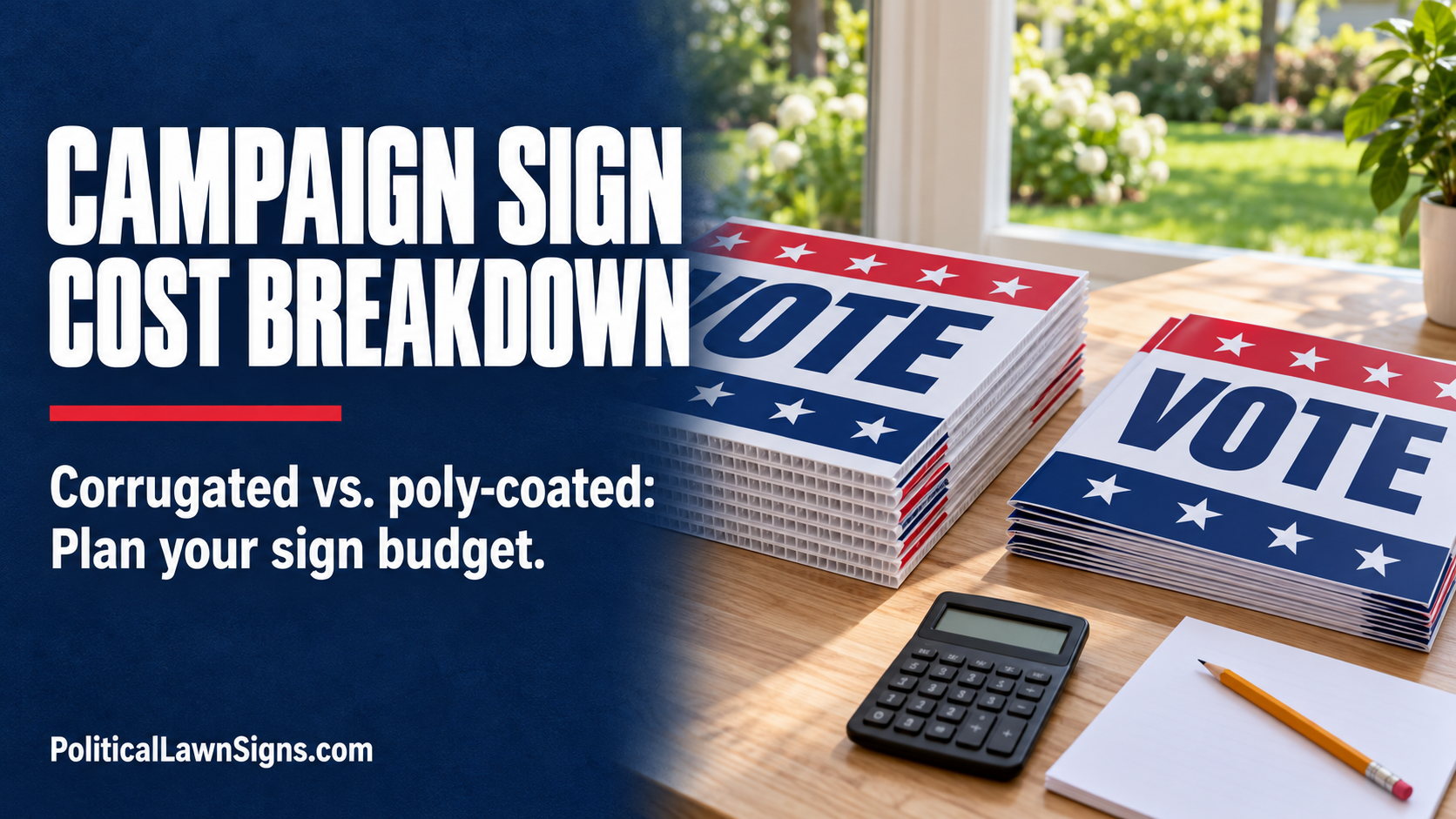
Poly-coated cardboard signs cost less per unit than corrugated plastic. Poly-coated poster signs are among the most affordable options available. Their fold-over design means you get two visible sides without paying for a double-sided print. The lower entry price is a genuine advantage for campaigns running on a tight budget or a short timeline.
Corrugated plastic costs more per unit upfront. The material is heavier, more durable, and built to handle prolonged outdoor exposure. Corrugated 18×24 yard signs last 2 to 3 years outdoors, which changes the cost conversation entirely for longer campaigns or candidates who plan to run again.
The real question is not which material is cheaper. It is the material that delivers more value relative to the length of your campaign and how your signs will be used.
What Drives the Price of Either Material
Several factors affect the final cost regardless of which material you choose:
- Order quantity: Both materials are priced on a tiered basis. The more you order, the lower the cost per unit. Small orders always cost more per sign than bulk orders.
- Sign size: Larger signs use more material and cost more to produce. This applies to both corrugated and poly-coated options.
- Print method: Full-color digital printing costs more than single-color screen printing across both materials.
- Hardware: Corrugated signs require H-shaped wire stakes, which are an additional cost. Poly-coated signs work with U-frames and wooden stakes, giving campaigns more flexibility with hardware they may already have.
- Shipping weight: Poly-coated signs weigh less, reducing shipping expenses on larger orders. Corrugated plastic is heavier, which increases freight costs for bulk shipments.
The Reuse Factor Changes the Math
Corrugated plastic signs can be cleaned, stored, and reused across multiple campaign cycles. Candidates who store signs properly after an election often reuse them during future races, reducing long-term cost significantly. When spread across multiple campaigns, the effective per-sign cost becomes much lower.
Poly-coated signs are built primarily for a single campaign cycle. Their typical outdoor lifespan ranges from 6 to 8 weeks. This makes them effective for short-term use but less practical for long-term storage and redeployment. Their lower upfront pricing reflects that shorter useful lifespan.
Using Both Materials to Stretch Your Budget
Many campaigns find the most efficient solution is combining both materials strategically. Corrugated signs handle long-term placements such as front yards, major intersections, and roadside visibility where durability matters most.
Poly-coated signs work well for rallies, temporary placements, events, and large-scale volunteer distribution where keeping cost per sign low becomes more important. Dividing the order this way helps campaigns control total spending while maintaining visibility across multiple campaign activities.
Campaigns evaluating corrugated vs. poly-coated signs cost often discover that a mixed-material approach delivers the best balance between durability and affordability.
Get the Numbers Right Before You Order
Choosing the wrong material for your timeline or placement can mean ordering signs twice, which costs more than getting it right the first time.
If you want help working through quantities, sizing, and material options before placing an order, our team is ready to help. With over 70 years of printing experience, we can help you put together a sign order that fits your campaign and your budget from the start.
FAQs
Does full-color printing cost significantly more than single-color?
Yes. Single-color screen printing is the more affordable option on both materials. Full-color digital printing produces sharper, more detailed designs but increases per-unit cost. Campaigns with simple name-and-message designs often find single-color printing meets their needs at a lower price point.
Can pooling orders with other campaigns lower costs?
Yes. Joining forces with other local campaigns to increase total order volume can unlock better tiered pricing from print vendors. It is a practical strategy for smaller campaigns that cannot reach high-volume thresholds on their own but still want the benefits of bulk pricing.
Are wire frames included in the sign price?
Wire frames are typically priced separately from the signs themselves. H-shaped stakes for corrugated signs and U-frames for poly-coated signs are ordered alongside the signs but as separate line items. Factoring hardware into the total budget upfront avoids unexpected costs at checkout.