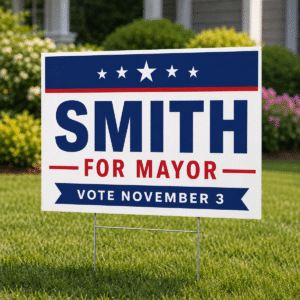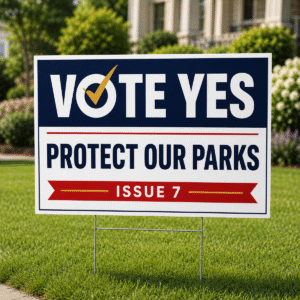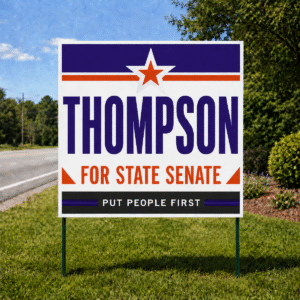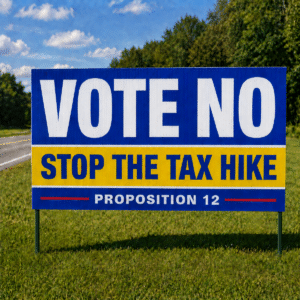
The Best Stakes For Your Political Yard Signs
Quick Summary
The best yard sign stake depends on sign size, material, soil type, and wind exposure. H frames work well for everyday corrugated lawn signs, while 30-inch and heavy-duty versions add stability in soft soil or windy areas. Spider stakes are easier to drive into firm or rocky ground, while U frames pair with poly-coated fold-over signs. Large road signs require sets of metal D stakes, and proper installation helps any stake remain upright for longer.
A campaign sign only works when it stays upright, and the stake beneath it plays a larger role than it often receives credit for. At PoliticalLawnSigns.com, we hear about signs bent by strong winds, knocked over by lawn mowers, and left sagging after heavy rain.
The problem often comes down to the hardware. Choosing yard sign stakes that match your signs and ground conditions helps keep your name visible from the first day of placement through Election Day.
How to Choose Yard Sign Stakes for Your Campaign
The right stake depends on several practical factors. Sign size comes first because a small lawn sign and a large road sign place very different loads on their frames. Material is another important consideration. Corrugated plastic signs slide onto wire prongs through their hollow channels, while poly-coated fold-over signs drape over a U-shaped frame.
Soil and weather also matter, as loose sand, hard clay, and open, windy fields each call for a different approach. Larger signs along highways often need heavier hardware such as D-stake yard sign holders, which offer more rigidity than light wire frames. Thinking through these details before ordering saves time and replacements later.
H Frame Stakes for Standard Lawn Signs
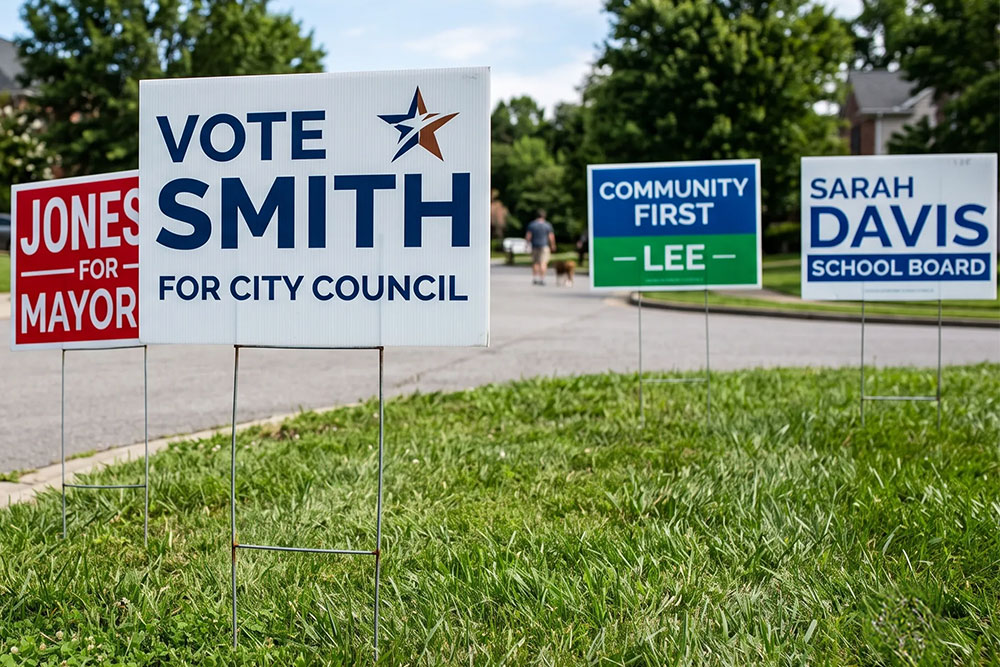
H frames are the familiar wire stakes commonly seen in front lawns during election season. The two top prongs slide into the flutes of a corrugated sign, while the bottom legs press into the soil. A 24-inch frame works well for standard lawn signs in typical yard soil. A 30-inch frame positions the sign higher and extends deeper into the ground, improving visibility over tall grass while adding stability in softer soil.
Heavy-duty H frame yard sign holders use thicker wire for windy corners or signs meant to last through a longer race. H frames are quick to install, easy to store, and reusable across more than one election.
Spider Stakes for Firm Ground and Quick Setup
Spider stake yard sign holders offer a different design. Instead of two legs, a spider stake typically uses a single ground spike with several prongs that grip the channels of a corrugated sign. The single spike can be easier to drive into firm or rocky soil, where two legs may struggle to go in straight.
Spider stakes also pack neatly, which helps volunteers who need to place many signs in one afternoon. They pair well with standard lawn sign sizes and give a clean look with very little visible wire.
U Frames for Poly Coated Fold Over Signs
Poly-coated fold-over signs work with a U-shaped wire frame. The sign folds over the top of the frame and is typically stapled or taped along the sides, creating two readable faces. Jumbo U frames accommodate larger poly-coated signs.
These signs cost less and typically hold up for about six to eight weeks outdoors, making them suitable for primaries and shorter races. Pairing them with a sturdy U frame keeps the sign taut and helps it retain its shape through wind and rain.
A few key points to consider include:
- Sets of stakes: Larger signs usually need three or four D stakes spaced evenly along the bottom edge.
- Secure fastening: Bolts, zip ties, or screws hold the sign firmly against the stakes.
- Depth: Driving stakes well into the ground helps them resist tipping in gusty weather.
- Reuse: Corrugated signs cost slightly more than poly-coated ones yet last two to three years outdoors, and metal stakes can be reused along with them.
Installation Tips That Keep Signs Standing
Even a properly selected stake can fail when installed incorrectly. A little care during installation can make a significant difference:
- Water the soil: Dampening dry, hard ground makes it easier to push legs in without bending them.
- Protect the wire: A rubber mallet or a scrap of wood over the crossbar helps prevent frame damage.
- Check flute direction: Corrugated signs need vertical flutes so the H Frame and spider prongs slide in cleanly.
- Stay clear of utilities: Contact 811 before driving long stakes or posts into the ground.
- Follow placement rules: Local ordinances may limit sign placement near roads, medians, and intersections.
Giving Your Signs a Solid Foundation
A well-matched stake keeps a campaign sign upright, readable, and professional through changing weather. H frames cover everyday lawn signs, spider stakes handle firm soil and fast setup, U frames pair with poly-coated fold-over signs, and D stakes anchor large road signs.
Matching hardware to sign size, material, and ground conditions saves volunteers from repeat trips to fix fallen signs. Get stake recommendations from our team, and we will help you match hardware to the signs on your list.
FAQs
Can yard sign stakes be reused after the election?
Wire frames and metal stakes can often be reused if they come out of the ground without bending. Cleaning off dirt and storing them in a dry place helps prevent rust and keeps them ready for the next campaign.
How can I discourage sign theft or tampering?
Placing signs closer to homes, porches, or well-lit areas makes them harder to remove without being noticed. Fastening large signs to D stakes with bolts instead of zip ties also adds a layer of security.
What works for spots with pavement or no soil?
Stakes need soil to grip, so paved areas call for another approach. A property owner may allow you to attach a sign to a fence or railing with zip ties, or you can use a freestanding sidewalk stand.
D-Stakes are used for the 24 x 24 (3/sign) & 36 x 24 (4/sign) size signs. The 4 x 4 & 4 x 8 signs require t-posts or fence stakes that are purchased at a local hardware store.