How Many Yard Signs Do I Need for a City Council Race?
Quick Summary
One sign per 30 registered voters is a practical starting point for a city council race, but district geography, name recognition, voter turnout, and confirmed placement locations all significantly adjust that number. First-time candidates and challengers consistently need more signs than incumbents. Ordering 15 to 20 percent above your estimated need protects against attrition, and holding back a portion of inventory for the final stretch keeps visibility high when it matters most.
Ordering too few signs leaves noticeable coverage gaps when campaign momentum matters most. Ordering too many leaves valuable campaign dollars sitting unused in storage instead of funding voter outreach.
At PoliticalLawnSigns.com, this is one of the most common questions we hear from local candidates, and the answer is never a single number. Figuring out how many yard signs for a city council race you need takes a few factors into account before you place your first order.
How Many Yard Signs for a City Council Race: Starting Points
A common guideline is one sign for every 30 registered voters within the district. Smaller city council districts with only a few thousand registered voters may need somewhere between 100 and 300 signs as a starting point. Larger districts or highly competitive races often move beyond 500 signs.
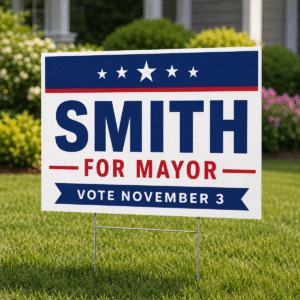
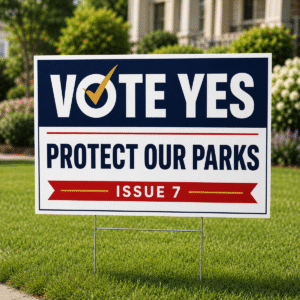
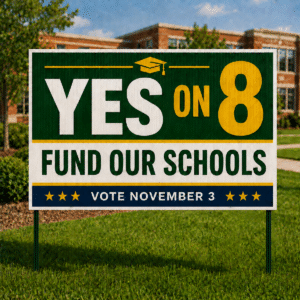
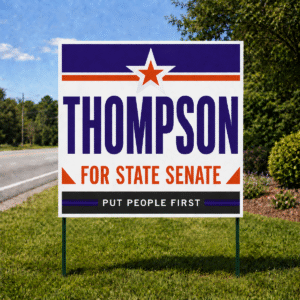
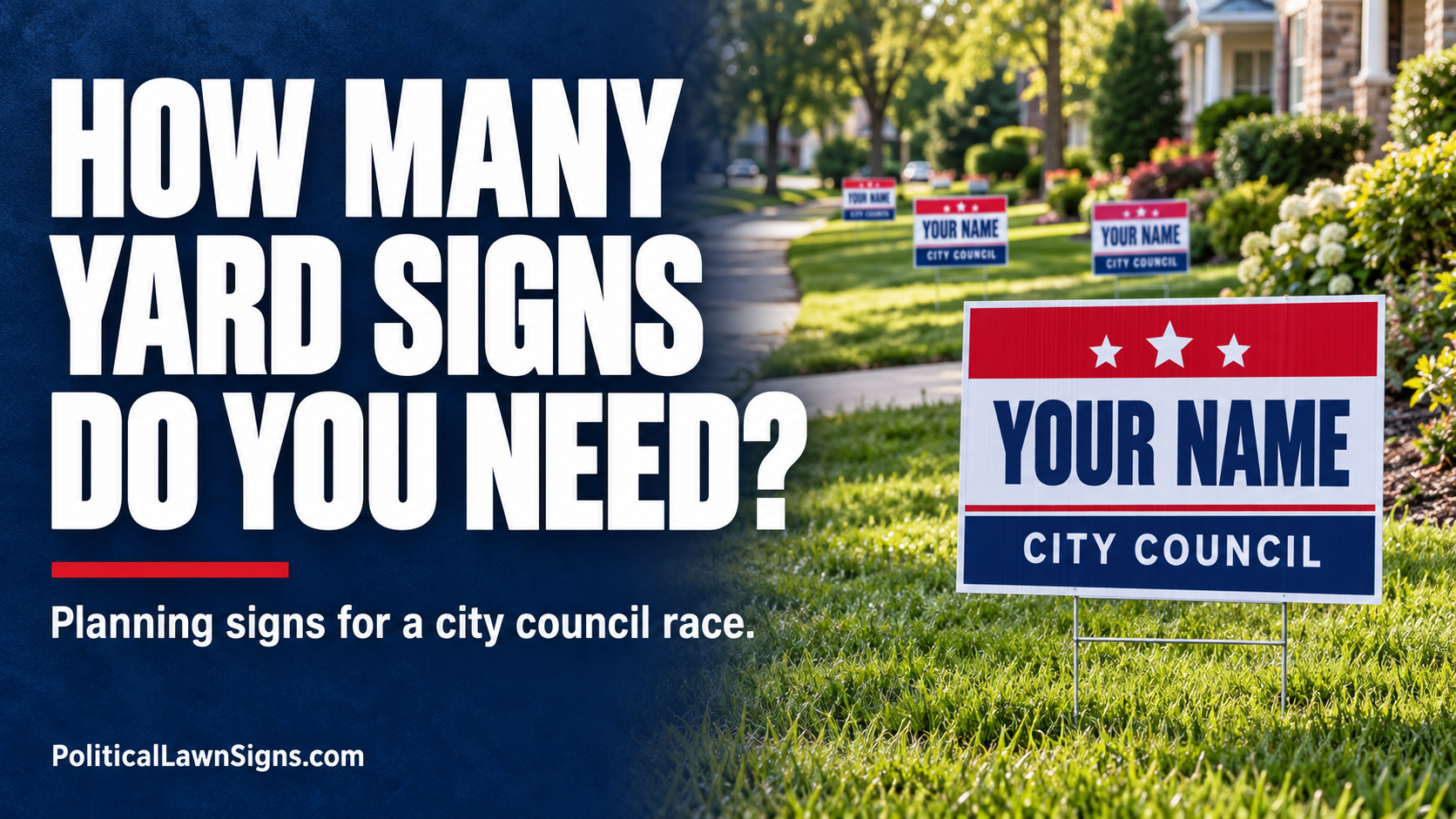
Corrugated 18×24 yard signs are the standard choice for residential placements and roadside visibility. They hold up through a full campaign season and are easy for volunteers to install quickly across a district.
The registered voter count is just the starting point. These variables shape the final number considerably:
- District geography: Dense urban neighborhoods require fewer signs per square mile than suburban or rural districts. One visible sign in a compact area reaches more voters than a sign spread across a wide rural corridor.
- Your name recognition: First-time candidates and challengers generally need more visibility than incumbents or well-known local figures. Strong sign saturation helps introduce new candidates to voters.
- Expected voter turnout: Local off-year elections often bring lower turnout numbers. Reaching a meaningful percentage of likely voters may require fewer signs than larger statewide races.
- Confirmed placement locations: Campaigns should calculate how many supporters have committed to hosting signs and identify high-traffic intersections available for placement. Large sign quantities without a placement plan waste money.
- Campaign budget: A practical ceiling always applies. Campaign packagescan help candidates balance the quantity of signs with other campaign materials without overspending on any single item.
Build in a Buffer and Plan Your Deployment
Campaigns should always order more signs than the initial estimate suggests. Signs disappear throughout the election season for many reasons, including weather, theft, lawn equipment, and general wear. Building in a 15 to 20 percent buffer helps maintain consistent visibility as election day approaches.
Holding back approximately 10 percent of inventory for the final one to two weeks can create a visible late-campaign push. Fresh sign placements during the final stretch often stand out more because voter attention increases closer to election day.
Relocating existing signs occasionally can create a similar effect. Drivers who stopped noticing a sign at one intersection may pay attention again once it appears in a different location. That strategy refreshes visibility without increasing printing costs.
Match the Sign Type to the Placement
Poly-coated poster signs work well for rallies, volunteer events, and temporary handouts where corrugated signs are less practical. Combining multiple sign materials can help campaigns stretch their budgets across different placement needs without sacrificing visibility throughout the district.
Larger corrugated signs make more sense along high-speed roads and at major intersections. Corner lots ideally get two or three signs to cover traffic from multiple directions. Prioritize high-visibility placements first, then fill in residential streets as budget and supporter access allow.
Order Smart and Get Your District Covered
There is no universal number, but there is a smart process for getting to yours. Take stock of your district size, your voter targets, your confirmed placement opportunities, and your budget before committing to a quantity. Getting the estimate right the first time is almost always cheaper than placing a second rush order closer to election day.
Contact us if you want help thinking through quantities and sign options before you order. With over 70 years of printing experience, we have helped candidates at every level put together a sign plan that covers their district and fits their budget from day one.
FAQs
Should I deploy all my signs at once or gradually?
Deploying signs all at once on a single weekend creates a stronger visual impact than trickling them out over weeks. A coordinated mass placement signals campaign momentum and can catch opponents off guard. Save roughly 10 percent of inventory for a final push in the last week before election day.
Do corner lots need more than one sign?
Yes. Corner properties sit at intersections where traffic approaches from multiple directions. Placing two or three signs on a single corner lot maximizes visibility without requiring additional property permissions. Prioritizing corners over mid-block placements gets more eyes on your name per sign installed.
When is the best time to place city council yard signs?
Timing depends on local regulations, but most campaigns begin placing signs four to six weeks before election day. Placing them too early risks voter fatigue and increased attrition time. Check your local sign ordinances for permitted start dates before scheduling your volunteer deployment days.